About
The Story Behind the Shelf
A reading life made public.
My Story
About the Existential Bookstore
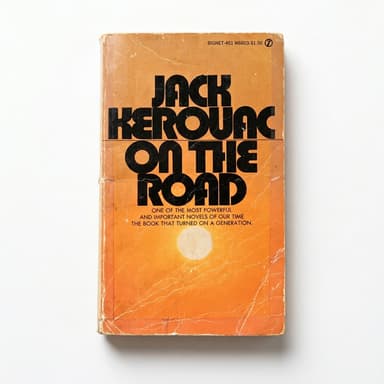
I grew up surrounded by books. My aunt worked at a bookstore, my uncle was a voracious reader, and between the two of them my childhood was filled with stories before I even knew what to do with them. While other kids were outside, I was digging entire Hardy Boys series out of neighborhood garbage heaps and reading every single one. Then came Stephen King — probably too young, definitely too young — but once you've read him you understand why people disappear into books for months at a time. He wrote so much that I never ran out. School book fairs were sacred. The cafeteria transformed once a year into something that felt like a wonderland, and I treated every one like a pilgrimage. Every book I collected became a marker of who I was becoming.
In eighth grade, a teacher asked if I had read On the Road by Jack Kerouac. That question changed everything. It opened a door I didn't know existed — the Beats, Kerouac and Ginsberg and Anaïs Nin, philosophy and existence and the uncomfortable feeling that life could be examined rather than just lived. I was reading at fifteen what most people wouldn't encounter until college, and I didn't entirely understand all of it, but I understood enough to keep going.
That led me to the existentialists, then to Gabriel García Márquez and the discovery that fiction didn't have to choose between beauty and truth. I fell in love with the Renaissance and the humanistic philosophy that insists life is more than survival — that it is art, cuisine, philosophy, beauty, meaning. And I became fascinated by science fiction writers like William Gibson and Neal Stephenson, who weren't really writing about the future at all. They were writing warnings about the present.
This bookstore is my way of sharing that trail with you.
How We Got Here
A Shared Shelf, a Shared Life
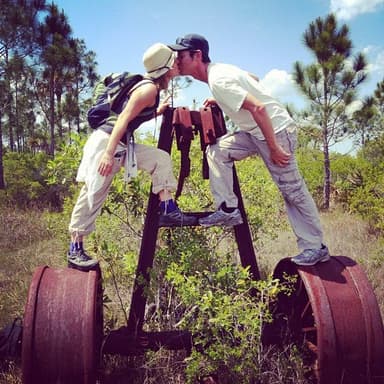
My wife and I fell in love over our shared passion for art, music, and literature. We navigate the world through song lyrics and passages from books and poems, through images from our favorite artists. We speak to each other in these languages.
So when we met on an online dating site, which is far less romantic than the story we prefer to tell, we immediately rewrote it. We say we met at an existential bookstore. She was reading Sartre, I was reading Camus, and we caught each other out of the corners of our eyes and struck up a conversation that changed everything.
From that fictional meeting place, we imagined something larger: a real bookstore in a bucolic college town or artsy community. We envisioned an old downtown brick building we would renovate and fill with books, comfortable chairs, the smell of coffee, and jazz playing softly in the background. Our cats and dogs would curl up with guests. My wife would make exotic elixir drinks. It would be a sanctuary, a place of solace where art, music, and literature converge.
For years, this place lived only in our minds—a magical realist dream. Now we are making it real. This website is the beginning of that dream. It is our way of curating the books and authors that shaped us, and inviting you into the world we have always imagined.
The Vision
More Than Reviews
We're building more than a bookshelf. In the near future, The Existential Bookstore will offer personalized newsletter recommendations powered by an understanding of your reading taste—not just genres you like, but the themes, moods, and questions that move you.
Eventually, we'll stock first editions and signed copies of the books we love most, sourced carefully and offered to readers who understand their value. But for now, every purchase link supports us through our affiliate partnerships.
Why “Existential”
The Name Is a Question
Because every great book is existential. Every act of reading is a choice to spend your finite time engaging with another consciousness. We believe that literature—at its best—doesn't just describe existence. It deepens it.
“One must imagine the reader happy.”