Our Review
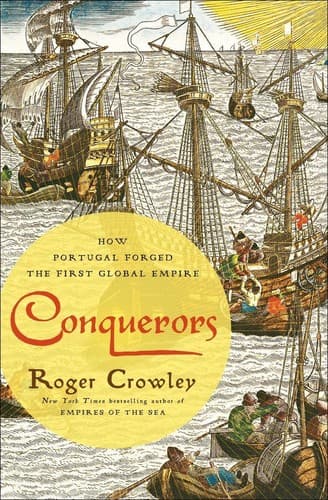
I found this book in an airport bookstore on my way home from one of my first business trips to China. I had nearly twenty hours in the air ahead of me, and I got through a good portion of it before I even landed. I was just learning about places like Macau, and it was around that time in my life that I realized the Philippines was named for King Philip of Spain—and I was burning to understand how these things came to pass.
What I couldn't get my head around was how the Portuguese had managed to secure their own territory in China, and how the Spanish had made it all the way from the Iberian Peninsula to the South China Sea and taken over an entire country. I was also starting to piece together how the Opium Wars fit into all of this—how the same maritime logic that put the Portuguese in Macau in the sixteenth century was still playing out three hundred years later when the British forced China open at gunpoint over a trade imbalance in tea and silver. I was just starting to get curious about human geography and maritime history, and this book dropped into my hands at exactly the right moment.
The story of how a small country on the edge of Europe reached out across the oceans and seized control of the Indian Ocean trade routes is one of the most extraordinary in human history—and Roger Crowley tells it with the propulsive energy of a thriller and the depth of serious scholarship. My fascination with the Age of Discovery runs deep. I see in it the same impulse that drove the Romans to build roads across Europe and Marco Polo to walk the length of the Silk Road: the human hunger to know what lies beyond the horizon. Commerce and conquest were always tangled together, and this book does not let you forget it.
The brutality of the conquerors never fails to astound me. Vasco da Gama, Columbus, and the rest were always presented as heroes in school, and while there is some truth to that, the things they did to earn that status were savage. It opened my eyes in a way that has stayed with me.
From there my curiosity expanded outward—into Portuguese and Spanish navigation technology, into their mapmaking and deal making, into corners of Caribbean history I hadn't known existed. This book was the beginning of a deep dive into the fifteenth and sixteenth centuries that I'm still on.
Essential reading for anyone who wants to understand how the modern world was built. And if you think you don't like history but you love adventure movies like Pirates of the Caribbean or Master and Commander, this book is for you.
For the broader context of the trade routes Portugal sought to dominate, The Silk Roads by Peter Frankopan is essential reading, while Imperial Twilight by Stephen R. Platt picks up the story as European maritime empires turned their attention to China.